Aarhus University Seal

Forming study groups using a ball game

Short description

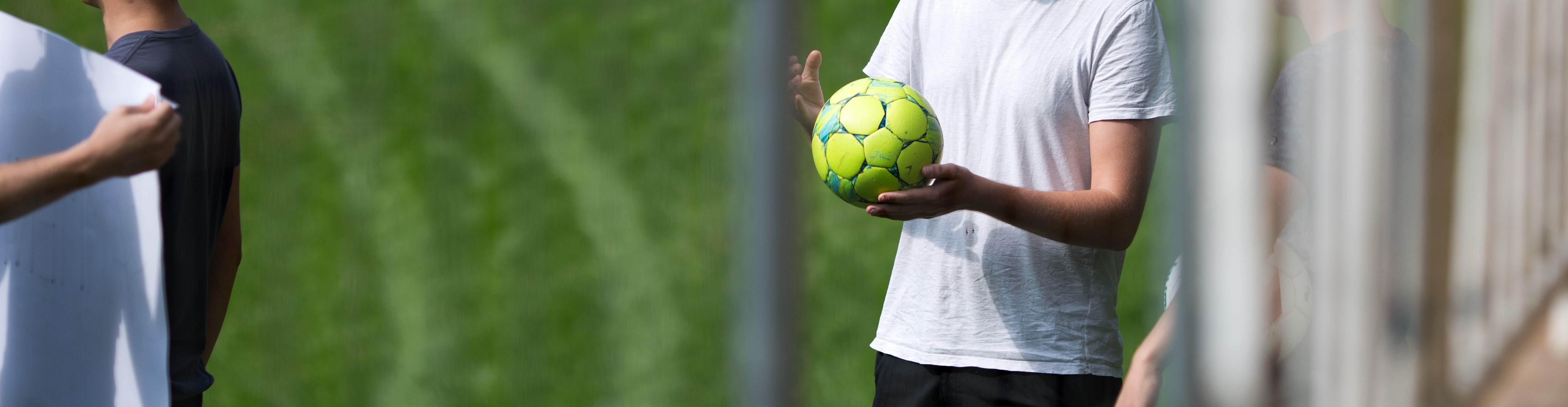
The students play a ball game to understand which role they tend to take on in group work. The ball game is part of a four-week long course of various group exercises, to test out groups made up of different members. The whole course allows students to reflect on which of their fellow students they would work well with for future projects. 

When the game is done, students have to form study groups based on what they learned about each other’s ways of working in a group during the game.  

The students have tried out various group exercises with different groups constellations throughout the first four weeks of the semester. The overall flow of the exercises can give insight into the different roles members take on in group work. The exercise allows students to reflect on who they work well with.  

Motivation

Demonstrate the value of collaboration in practice rather than just theoretically. 


Learning objectives

  • Realise the benefits of working together in a group compared to working individually. 

  • Gain insight into the students’ own roles in group work. 

Execution

THE PROCESS

In class

Groups

  • Groups of 6-10 students form a circle. Each group gets one ball. 

    • Round 1: Students throw the ball around in the circle. Each student says their own name before they throw the ball to the next person. Students throw the ball around until every group member has had it. The students aren’t allowed to throw the ball to the people standing on either side of them. The order that the ball gets thrown in will be used in the following rounds.  
    • Round 2: The students now have to say the name of the person they’re throwing the ball to, and then throw it in the same order as the previous round. 

  • The students set a goal for how fast they can pass the ball around to all group members. 

In plenum

  • Each group shares what their goal is for the round. The teacher sets an overall goal for all groups this round. 

Groups

  • Round 3-5:

    • The groups try to get through the round as quickly as possible.

  • Round 6:

    • Students now have to halve their fastest time, to imitate optimising group productivity. This will most likely cause frustration in the group, but some members will come up with creative solutions.

In plenum

  • The teacher asks each group to summarise: who took on what role in the group? Who got frustrated and who came up with creative solutions? Who gave up or didn’t want to participate?

  • The teacher relates the students’ experiences to the course content on study groups and roles. The teacher facilitates a discussion on whether it is most interesting to form groups with people who work alike or with people who take on different roles.  

After class

Groups

Based on the informal dialogue at the beginning of the semester, the students form their own study groups. The groups create their own group rooms on Brightspace. The teacher creates extra rooms, so that those left over can also be sorted into groups.  

RESOURCES FOR STUDENTS

SUPPORT FOR STUDENTS

  • Two theoretical texts on teams, teambuilding and Belbin’s team roles.
  • The student counsellor gives two lectures on study groups.  

  • The student counsellor will also be available in case the students need help in forming the groups.  

  • Students can also ask the teacher for help, to reduce frustration. 

Experiences

Outcomes

  • The exercise allows students to reflect on who they work well with. The overall flow of the exercises can give insight into the different roles members take on in group work.  

  • The activity is a way to work with the course’s theoretical material hands-on. 


Challenges

  • Group dynamics and roles are part of the course’s theoretical field. But if the topic isn’t part of the course content, it will be harder for students to reflect on group processes. 


Advice for other educators

  • The teacher should practice doing the exercise in smaller classes before using it in bigger classes. 

  • Make sure to have fun while doing the exercise! 


Basic information

Educator Claus Jørgensen 
Faculty and department BSS, BTECH 
Degree programme Bsc 
Level of study 1. semester
Course Project and team management 
Number of students 82
Extent Activity
Teaching format Classroom instruction 
Supervision 
Implementation Spring 2023

Links and materials

Literature: 

  • Chapters 4 and 5 from: Levi, D. and Askay, D.A. (2021): Group Dynamics for Teams. 6. Edition, Sage 

Contact